
CALL NOW
☰
Lost a loved one because someone else was careless? We’re sorry. When you’re ready to talk, we’re here. 50+ years of experience. $1 billion+ recovered for our clients. No fee unless we win.
While you wait:
If you’re reading this page, something has happened that no website can fix. You’ve lost a husband, a wife, a child, a parent, a partner. You’re trying to think clearly about a legal claim while you’re also trying to plan a funeral, talk to family members, and answer questions you never expected to have to answer.
We don’t want to oversell what a lawsuit can do. It can’t undo what happened. It can’t bring your loved one home. What it can do, when it’s handled correctly, is hold the responsible party accountable, replace some of the financial security that was taken from your family, and give you the resources to take care of the people who depended on the person you lost.
We’ve been doing this work for more than 50 years. We’ve sat across from a lot of grieving families. We will not rush you, we will not pressure you, and our consultation is always free and confidential. If now isn’t the right time to talk, that’s okay. When you’re ready, call us.
Scranton Law Firm has represented California families in wrongful death cases for more than 50 years. We’ve recovered over $1 billion for our clients, and behind every one of those numbers is a family that lost someone and decided not to let the responsible party walk away unaccountable.
We know Concord. We know its freeways and the kinds of fatal collisions that happen on them. We know the Contra Costa County Coroner’s process. We know the Contra Costa County Superior Court, the way wrongful death claims are litigated here, and the way insurance companies and corporate defendants try to reduce a human life to a spreadsheet line item. If your loved one was killed in Concord, or anywhere in the county, we are the team you want on your side.
Two trial lawyers based in our Concord office. Direct access. Every call returned.
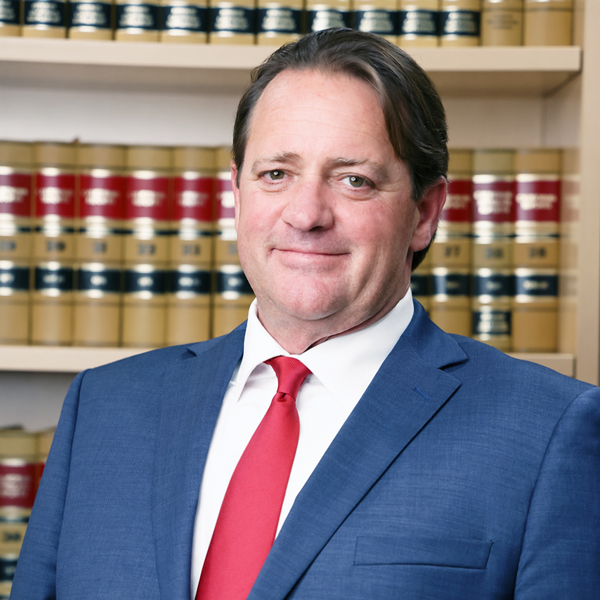
Leading the firm since 2009. A rider who has been through surgeries and rehab himself, and knows what an injury takes from you.
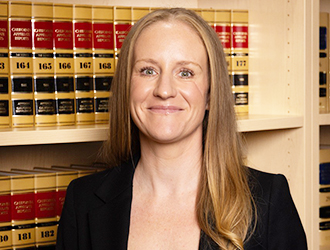
With the firm since 2019. An award-winning trial advocate who prepares every case as if it is going in front of a jury.
A wrongful death claim is a civil case filed by surviving family members when a person dies because of someone else’s negligence, recklessness, or intentional wrongdoing. It is separate from any criminal case. A driver can be convicted of vehicular manslaughter and you can also pursue a wrongful death claim, they are different processes with different burdens of proof and different remedies. A driver can be acquitted in criminal court and still be held financially responsible in a civil wrongful death case.
In California, wrongful death is governed by California Code of Civil Procedure § 377.60. The law specifies who has the right to bring the claim, what damages are available, and how those damages are divided.
The purpose of a wrongful death case is not to punish, punitive damages in wrongful death are limited under California law. The purpose is to make the family financially whole, to the extent that any amount of money can do that, for the loss of the person they loved.
This is one of the most common questions families ask, and one of the most important to get right. Under CCP § 377.60, the people entitled to bring a wrongful death claim, in order of priority, are:
In addition, the following people may have a claim if they were financially dependent on the person who died:
California treats the wrongful death claim as a single action, not a series of separate lawsuits. That means all eligible heirs generally have to be brought into one case, and the recovery is divided among them based on their respective losses. We coordinate this for families regularly, including in situations where family members don’t agree on every detail. Part of our job is to keep the focus on the case while you grieve.
People often use “wrongful death” as a catch-all term, but California law actually recognizes two separate types of claims that can arise from the same incident:
Wrongful Death Claim (CCP § 377.60). Filed by the surviving family. Compensates the family for their losses, the financial support they would have received, the household services the decedent provided, the love and companionship they will no longer have.
Survival Action (CCP § 377.30). Filed by the personal representative of the decedent’s estate (or, in some cases, the successor in interest). Compensates the estate for what the decedent themselves suffered between the moment of injury and the moment of death, medical bills incurred before death, lost wages between injury and death, and (under recent California law) certain pre-death pain and suffering.
These claims are usually filed together in one lawsuit. They are not duplicative, they cover different losses, and pursuing both is often essential to fully accounting for everything the family and the estate have lost. We evaluate both at intake.
California allows recovery of two broad categories of damages in a wrongful death case: economic and non-economic. A separate set of damages may be recoverable through the survival action.
Economic damages are the measurable financial losses to the family:
Non-economic damages are the human losses, losses that don’t show up on a pay stub but are just as real:
One important California rule: Grief, sorrow, and the family’s own emotional suffering are not compensable as wrongful death damages in California. This is a frequent point of confusion. What is compensable is the loss of what the decedent provided, the companionship, the guidance, the relationship. The distinction is subtle but important. A skilled wrongful death attorney knows how to develop the evidence that puts the relationship, and what was taken, in front of the jury.
In rare cases where the at-fault conduct was particularly egregious, for example, a drunk driver with prior DUIs, or a corporate defendant that knowingly concealed a hazard, punitive damages may also be available, typically through the survival action rather than the wrongful death claim itself.
Wrongful death cases in Contra Costa County most often arise from:
Fatal traffic collisions. I-680, Highway 4, Highway 242, Kirker Pass Road, and the Willow Pass Road carry enormous volumes of passenger and commercial traffic. The same conditions that produce serious-injury crashes, speed, distraction, DUI, fatigue, congestion, produce fatal ones. Multi-vehicle collisions on these freeways frequently result in death.
Big rig and commercial truck crashes. When an 80,000-pound rig hits a passenger vehicle, the injuries are often unsurvivable. Kirker Pass Road and I-680 both function as major freight corridors through the Concord Valley.
Motorcycle fatalities. Riders are exposed in a way drivers are not. A collision that would leave a driver with a sore neck can kill a rider.
Pedestrian and bicycle fatalities. Local safety reporting has repeatedly identified corridors like Monument Boulevard, Treat Boulevard, Port Chicago Highway, Clayton Road, and Willow Pass Road as some of Concord’s deadliest stretches for pedestrians and cyclists. Drivers running red lights, making rolling right turns, or drifting across bike lanes are recurring patterns in those fatal cases.
DUI fatalities. Concord’s nightlife districts, downtown Concord, the Willow Pass Road corridor, the entertainment area near Todos Santos Plaza, generate consistent late-night impaired driving. The aftermath frequently lands in our office.
Workplace deaths. Construction sites, warehouses, agricultural operations in southern Contra Costa County, and freight/logistics work can all give rise to wrongful death claims. (Workers’ compensation may be one source of recovery, but a “third-party” wrongful death claim against someone other than the employer is often also available.)
Medical malpractice. Deaths caused by surgical errors, misdiagnoses, medication errors, or negligent post-operative care can give rise to wrongful death claims, though California medical malpractice cases have separate procedural rules and damage caps that an experienced attorney will walk you through.
Nursing home neglect and elder abuse. Falls, untreated pressure sores, dehydration, malnutrition, medication errors, and physical abuse in nursing homes and assisted living facilities can rise to the level of wrongful death. California has additional statutory protections for elders that can apply to these cases.
Defective products. Vehicles with defective airbags, tires, or seatbacks; defective consumer products; and dangerous pharmaceuticals can all give rise to wrongful death claims against manufacturers.
If you’re not sure which category your loved one’s case fits, that’s exactly what a free consultation is for. We’ve handled all of them.
We do not say this to upset families further. We say it because where the collision happened often shapes what evidence is available and which agency investigates.
If your loved one was killed on any of these roads, we have likely investigated a similar collision before and know what evidence to preserve immediately.
After a sudden death in Concord, the Contra Costa County Office of the Sheriff, Coroner Division is the agency responsible for determining the cause and manner of death. The Coroner’s office produces the official autopsy report and death certificate, both of which are central pieces of evidence in any wrongful death case.
The Coroner’s process can feel overwhelming on top of everything else: phone calls about identification, questions about belongings, paperwork at a moment when you can barely think. We help families navigate this. We can request the autopsy report, the toxicology results, and any photographs or scene documentation that the Coroner produced. We also coordinate with law enforcement, Concord Police, CHP, or the Contra Costa County Sheriff’s Department, depending on where the death occurred, to obtain the full investigative record.
You don’t have to chase any of this paperwork yourself. We do.
50 Douglas Drive, Martinez, CA 94553
Coroner / death investigation records
Cause-of-death determinations, autopsy records, and coordination after sudden fatal incidents
1350 Galindo Street, Concord / 5001 Blum Road, Martinez
Concord PD: city streets · CHP: freeway fatalities
We pull both the fatal-collision and coroner records needed to build the wrongful death case
We pull these reports for our clients as part of intake. You don’t need to deal with the bureaucracy yourself. In fatal cases, that early records work matters even more because the report, coroner file, scene evidence, and witness accounts are the spine of the entire case.
In many wrongful death cases, the loved one was first transported to a hospital, sometimes alive, sometimes not. Hospital records may matter for the survival-action portion of your case (pre-death pain, treatment, medical bills) and for establishing cause of death.
2540 East Street, Concord, CA 94520
24/7 emergency care
Closest ER for many Concord fatal-incident responses
1601 Ygnacio Valley Road, Walnut Creek, CA 94598
Level II trauma center
Regional destination for catastrophic injury care
1425 South Main Street, Walnut Creek, CA 94596
24/7 emergency department
Common destination for Kaiser members in East Bay cases
We’ve worked with all of these facilities and can obtain medical records, billing records, and treatment timelines on your behalf.
Wrongful death lawsuits in Concord are filed at the Wakefield Taylor Courthouse at 725 Court Street, Martinez, CA 94553. Civil cases, including wrongful death and survival actions, are heard there.
A few things that matter for your case:
We hate the urgency of this, because the last thing a grieving family wants is a lawyer telling them to “act fast.” But the truth is that the early days after a fatal incident are when the most important evidence either gets preserved or gets lost forever.
You do not need to be ready to “make a decision” to call us. You can call to ask questions. You can call just to find out what your options are. You can call so we can preserve evidence while you take the time you need to decide how you want to proceed. That is often the smartest move a family makes in the first few weeks.
If you are reading this in the days after losing someone, here is the order of operations that protects your family’s rights, and that we can help you with at every step.
Step 1, Confidential, no-pressure consultation. You call. We listen. We answer your questions. There is no fee and no commitment. If we don’t think you have a case worth pursuing, we’ll tell you honestly. If you do, we’ll explain what comes next.
Step 2, Investigation and evidence preservation. We immediately send preservation letters, request the police and Coroner reports, secure surveillance footage, identify and interview witnesses, and engage accident reconstruction or medical experts as needed.
Step 3, Estate and heir coordination. California requires the wrongful death action to include all eligible heirs, and the survival action to be brought by the estate’s personal representative. We help coordinate, and where appropriate, work with probate counsel, to make sure the case is properly structured.
Step 4, Damages workup. We document the family’s economic losses (financial support, household services, funeral and burial costs) and develop the evidence needed to value the non-economic losses (companionship, guidance, love and care). For families with minor children, this often involves expert testimony about the long-term impact.
Step 5, Demand and negotiation. Once we have a complete picture of liability and damages, we send a demand to the at-fault party’s insurance company and negotiate firmly. Most cases settle. Some don’t.
Step 6, Litigation if needed. If the insurance company won’t pay what your family’s case is worth, we file suit. The willingness to take a wrongful death case to trial is often what produces a serious settlement offer.
Step 7, Resolution and distribution. Settlement or verdict. We resolve outstanding liens, deduct fees and case costs, and coordinate the distribution of the recovery among the eligible heirs as the law requires.
You don’t pay us anything unless we recover for your family. We front the costs of investigation, expert witnesses, and litigation. If we don’t win, you owe nothing.
Under California Code of Civil Procedure § 377.60, the surviving spouse, registered domestic partner, children, and grandchildren of any deceased child have the primary right to file. Beyond that, anyone who would inherit under California’s intestate succession laws can file if there is no surviving spouse, partner, or descendants. Certain dependent parents, stepchildren, putative spouses, and minors who lived in the decedent’s household and depended on them for support may also have a claim. We can tell you in a free consultation whether you qualify.
A wrongful death claim (CCP § 377.60) is brought by the surviving family for their losses, financial support, companionship, household services, funeral expenses. A survival action (CCP § 377.30) is brought by the decedent’s estate for what the decedent suffered between injury and death, pre-death medical bills, lost wages between injury and death, and certain pre-death pain and suffering under recent California law. They are different claims and they are usually filed together.
Generally two years from the date of death under CCP § 335.1. Claims involving a government entity (city, county, state, or a public employee) require a written government claim within six months, and that deadline is strictly enforced. Medical malpractice cases have separate, often shorter, timing rules under CCP § 340.5. The clock starts running at death, not at the moment a family member learns the legal details, so do not wait.
Yes, in fact, California treats wrongful death as a single action that must generally include all eligible heirs in one case. Different family members can have different losses (a young spouse and minor children may have a much larger claim than an adult sibling), and the recovery is divided based on those respective losses. Coordinating multiple heirs is a routine part of what a wrongful death attorney does.
Economic damages, loss of financial support, loss of household services, funeral and burial expenses, and (through the survival action) pre-death medical bills. Non-economic damages, loss of love, companionship, comfort, care, assistance, protection, affection, society, moral support, and (in spousal claims) loss of intimate relations. In rare cases involving particularly egregious conduct, punitive damages may be available through the survival action.
The family’s own grief, sorrow, and emotional anguish are not compensable as wrongful death damages in California. What is compensable is the loss of what the decedent provided, companionship, guidance, love, support, and the relationship itself. The distinction is real, and it’s part of why an experienced wrongful death lawyer matters: we know how to develop the evidence that puts the value of the relationship in front of a jury.
There is no fixed formula. Juries consider the closeness of the relationship, the length of the relationship the family has lost (a young spouse may face 40+ years without their partner; a parent of young children faces decades of birthdays, milestones, and guidance that won’t happen), the role the decedent played in the family’s daily life, and the testimony of those who knew the decedent and the family. Building this evidence is one of the most important things we do.
Yes. California is a pure comparative negligence state. Even if your loved one was partly at fault, say, by not wearing a seatbelt, jaywalking, or some other contributing factor, your family can still recover. The recovery is reduced by their percentage of fault, but not eliminated. Insurance companies will try to push as much fault as possible onto the person who died (because that person can no longer testify). Don’t let them. Talk to us first.
No. Under California’s “collateral source rule,” life insurance benefits, employer benefits, and other independent sources of compensation generally do not reduce a wrongful death recovery. Life insurance is something your loved one paid for or earned, it’s not a credit to the at-fault party.
Possibly two claims, depending on the facts. Workers’ compensation typically provides survivor benefits when an employee dies on the job. Workers’ comp is generally the exclusive remedy against an employer, but if a third party (someone other than the employer or a co-worker) caused or contributed to the death, a separate “third-party” wrongful death claim against that party is often available. Examples: a defective piece of equipment made by another company, a careless driver who hit your loved one while they were working, or a negligent contractor at the same job site.
Your family can still pursue a claim against the at-fault driver’s estate and against their insurance policy. The fact that the driver also died does not extinguish your right to recover. We have handled cases in this category and know how to navigate the probate-side issues that come up.
You may still be able to recover through the uninsured/underinsured motorist (UM/UIM) coverage on your loved one’s own auto insurance policy or, in some cases, on the policy of a household relative. UM coverage is exactly designed for situations like this. We pursue these claims regularly.
It varies. Simpler cases with clear liability and reasonable insurance carriers can resolve in 9 to 18 months. Cases involving disputed liability, complex injuries, multiple defendants, or corporate or government defendants frequently take 18 to 36 months or longer. We give every family an honest timeline at intake, and we update it as the case develops.
Nothing up front. We work on contingency, our fee comes out of the recovery, only if we win. We also front the costs of investigation, expert witnesses, and litigation. If we don’t recover for your family, you don’t owe.
Probably not, though every family is different. The vast majority of wrongful death cases resolve through settlement before trial. But we prepare every case as if it will go to trial, because that’s what produces fair settlement offers. If your case requires it, we will take it all the way.
Right now. Call 1-800-707-0707, 24/7. The consultation is free, confidential, and no-obligation. You can also request a confidential case review online.
More Concord injury help:
Nothing about this is easy. We know that. We won’t pretend that a lawsuit will fix what’s been broken in your family. What we can tell you is that the at-fault party, and their insurance company, are not going to volunteer to do right by you. Someone has to make them. That’s what we do. Free consultation. No fee unless we win.
Or take our free case quiz →Attorney Advertising. Scranton Law Firm, 2450 Stanwell Dr, Concord, CA 94520. Responsible attorney: Christian Scranton, California State Bar #196959. Prior results do not guarantee a similar outcome.